
Will a Dumpster Damage Your Driveway?
The most common hesitation we hear from first time renters is not about size or scheduling. It is the driveway. People picture a steel container full of concrete parked on their concrete and imagine cracks, gouges, and a repaving project, and a few horror stories from the internet do not help.
Here is the honest answer from a company that places containers on Winchester driveways every day: damage is rare, preventable, and almost always traceable to skipping one cheap step. This article covers where the weight actually goes, what boards do, and how to read your own driveway before delivery day.
Will a dumpster damage my driveway?
Not when it is placed with basic protection. A roll off container rests on two steel rails, and laying boards or plywood under those rails spreads the weight enough to protect a sound driveway. The realistic risks are soft asphalt on hot days, older or already cracked concrete, and loose gravel, and all three are manageable with placement choices.
The overwhelming majority of rentals end with the container leaving no trace beyond a clean rectangle where the leaves did not fall. The exceptions almost always involve zero protection on a vulnerable surface, which is exactly the combination this guide teaches you to avoid.
Where the weight actually goes
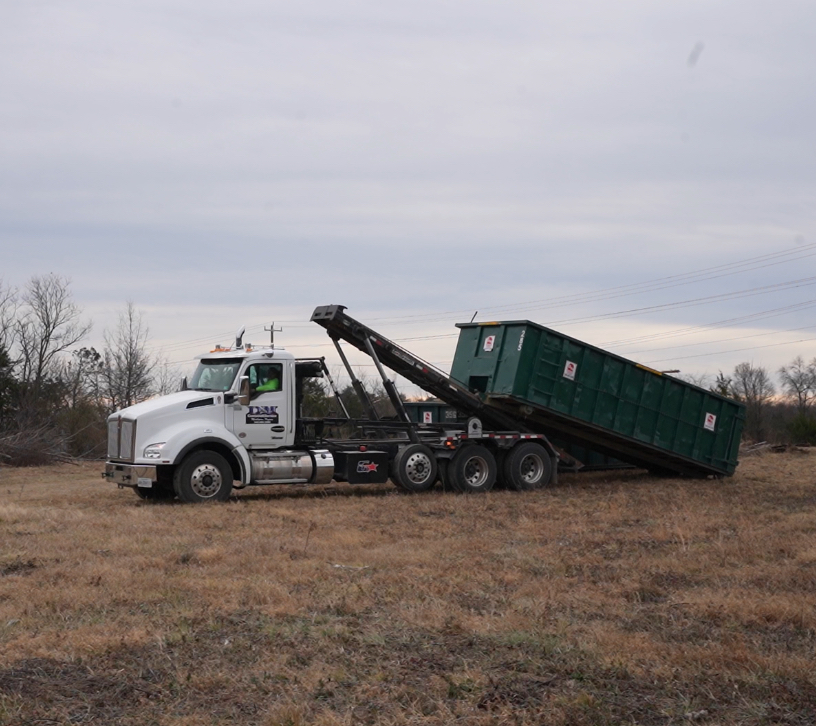
An empty container is heavy and a loaded one is much heavier, but the number that matters is pressure, not weight. The entire load concentrates on narrow steel rails, and on the small wheels the container rides during delivery and pickup. Those two moments, the roll on and the roll off, put more stress on your driveway than the whole week the container spends sitting still.
That is also why the truck matters. The delivery truck itself outweighs anything your driveway normally hosts, and it needs a straight approach to the placement spot. A good driver manages the angles gently, keeps the container moving slowly, and sets it down rather than dropping it, which covers most of the protection story before boards even enter the picture.
Boards and plywood, cheap insurance
The standard protection is simple: dimensional lumber or thick plywood laid where the rails will land, covering the contact points at both ends of the container. The wood spreads concentrated pressure across a wider footprint, keeps steel off your surface, and prevents the scuffing that can happen as a container settles under load. It also buys forgiveness if the container shifts slightly during loading.
Ask about protection when you order and have the material laid out before the truck arrives, or ask us about placing boards at delivery. Scrap plywood from the very renovation you are running works fine. It is a five minute step, and it removes nearly all of the risk this article exists to discuss.
Read your surface before delivery day
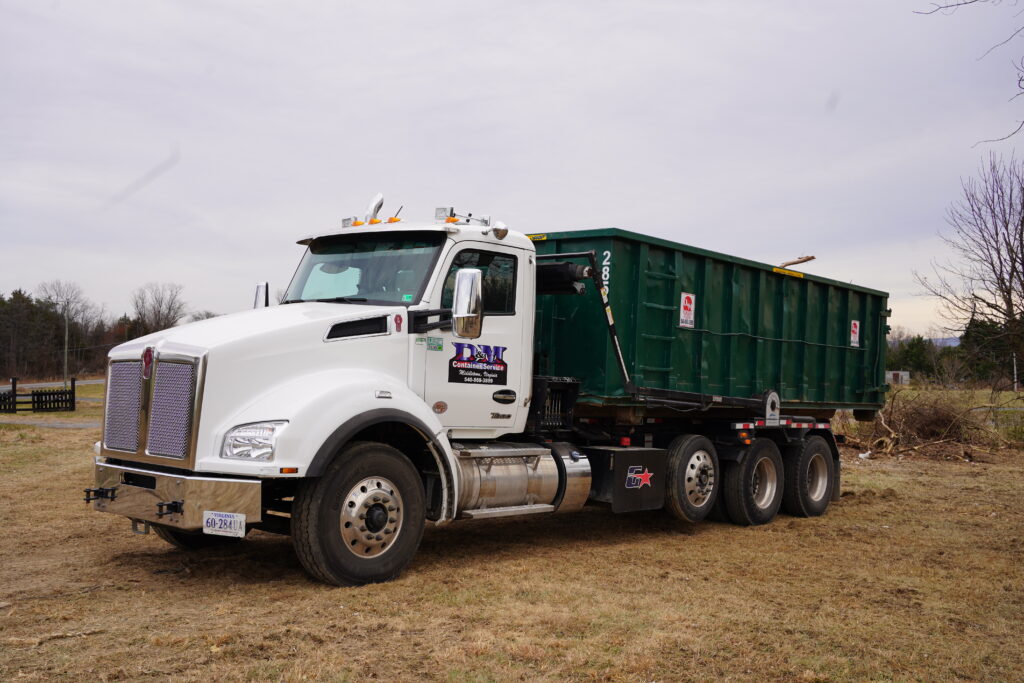
Concrete in good condition is the most forgiving surface, while concrete with existing cracks deserves boards and a spot away from the damaged sections. Asphalt is tougher than it looks in cool weather and softest in heat, and since warm afternoons stretch deep into a Winchester September, asphalt driveways should always get boards. Gravel handles weight fine but can rut under the wheels, so expect some raking afterward.
Think past the surface itself too. Skip spots over septic tanks and leach fields, flag irrigation heads, and note the slope, since containers want reasonably level ground. If the driveway is short, steep, or shared, mention it when ordering and we will talk through the options, including street placement where the locality allows it.
Loading habits that protect the pad underneath
How you fill the container matters as much as where it sits. Distribute heavy material across the floor instead of stacking it all at one end, which concentrates pressure on a single set of contact points. Lower dense items like concrete chunks and appliances over the wall instead of dropping them from shoulder height, because a hard impact inside the container transfers straight down through the rails.
Respect the fill line for the same reason. A container loaded level with the rim leaves the way it arrived, while an overloaded one strains against the truck during pickup, and that strain is when driveways get scraped. If the project outgrows the container, call for a swap early, because a mounded load is where pickup day goes wrong.
Bottom Line
A dumpster and a driveway coexist just fine when three things happen: boards under the rails, a placement spot matched to your surface, and a level, evenly distributed load. Asphalt gets extra caution in warm months, gravel gets a rake afterward, and sound concrete barely notices the visit. D&M Container Service places containers across Winchester and Frederick County with care and can set protection at delivery if you ask, so tell us about your driveway when you order and it will look untouched when we leave.
Related reading: Yard Waste and Fall Cleanup with a Roll Off Dumpster, Handling Renovation Debris with a Roll Off Dumpster


